
Evergreen Oral Surgery
How Wisdom Teeth Are Removed
 Don’t be worried about your wisdom tooth extraction, let us outline the whole process for you:
Treatment Development
During late adolescence, wisdom teeth start to appear and occasionally are accompanied by oral pain, as well as an increased risk of dental issues such as pericoronitis, gum disease, and tooth decay. Through evaluation, your oral surgeon will determine the number of wisdom teeth present, as well as how they are developing in relation to the rest of your teeth. Using advanced imaging technology, an oral surgeon will discover if the teeth are partially or fully impacted, and then will create a strategic treatment plan in order to remove the teeth and ensure successful recovery.
Read the rest of this entry »
Little, Medium, Big Dental Bone Grafts
Bone grafting is a straightforward procedure that is immensely beneficial for numerous reasons. In the instance of a missing tooth (or teeth), the jaw bone can begin to slowly degrade. The jaw bone holds teeth in place, and once a tooth is no longer present, the bone doesn’t have anything to support. There are different types of bone grafts depending on your situation.

Outlined below are several different types of bone grafts:
Read the rest of this entry »
Dental Implant Success
What do you use your teeth for? Eating, drinking, speaking, laughing, the list goes on! How are these affected when you have tooth loss?
If you have missing teeth, you could be missing a lot! A very reliable and safe method for replacing teeth is dental implants.
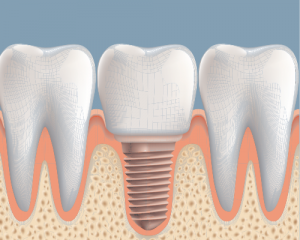
Dental implants permanently attach prosthetic teeth to small posts or “roots” that are embedded in the jaw. These posts are made of titanium, and securely fuse to the jaw bone, this helps restore the full functionality of previously missing teeth.
Dental implants not only effectively and reliably replace missing teeth, but also help prevent the loss of jawbone density, restore the support of facial structures, and provide you with the support you need to effectively use your teeth.
The procedure for dental implants can be a quick and easy, and in some cases, can be done in a single day. Your implants become part of you, so they eliminate the discomfort of removable dentures. They also prevent the embarrassment of removing dentures at every snack or meal, as well as the need for denture adhesives.
Sliding dentures can make chewing difficult. Dental implants function like your own teeth, allowing you to eat your favorite foods with confidence and without pain. Nearby teeth are not altered in order to support a dental implant, thus more of your own teeth are left intact, improving oral health in the long-term as well as your oral hygiene.
Dental implants are very durable, lasting several years, and if they are in good care, can last a lifetime.
Don’t miss out with missing teeth, get your smile back and feel better about yourself!
Here at Evergreen Oral Surgery we specialize in dental implants, so give us a call today on 253-473-0651 to discuss your future implant success!
Types of Jaw Surgery
Your jaw consists of two parts; the maxilla or upper jaw and the mandible or lower jaw . Sometimes these are misaligned and need to be put back into place for bite reasons, or for aesthetic purposes. Corrective jaw surgery straightens or aligns the jaw, and is often referred to as “orthognathic” surgery; “orthos” meaning to straighten and “gnathic” relating to the jaw. 
There are a few different types of jaw surgery, depending on which part of your jaw requires correcting;
Maxillary Osteotomy (Upper Jaw)
This type of surgery corrects a significantly receded upper jaw, cross bite, or when you have too many or too few teeth showing. It also can adjust an open bite.
Mandibular Osteotomy (Lower Jaw)
This surgery corrects a significantly receded lower jaw. The surgeon moves the jawbone forwards or backwards depending on the best adjustment and bite alignment.
Genioplasty (Chin)
A deficient chin often accompanies a severely receded lower jaw. Typically, surgeons can alter the jaw and restructure the chin during the same surgery.
Once your jaw is aligned, tiny screws and plates hold the bone into position. These screws and plates are osseo integrated and are specially formulated to be compatible with your body. They become integrated with your bone over time and do not have to be taken out.
Extra bone can also be added to your jaw if there is insufficient bone. This can be grafted from your hip, leg, or rib.
Often these types of jaw surgeries are performed entirely inside the mouth without any evidence on the skin surface as to what procedure has been performed. There are no facial scars on the chin, jaw or around the mouth.
Often with extensive jaw surgery, the process is carried out after you have had braces, so your teeth are aligned and ready for your jaw to be moved. Braces are placed anywhere from 9 to 18 months before jaw surgery.
Jaw surgery can take up to 2 years to complete, but the results are for life! Know your jaw facts; Talk to us today to discuss your options!
Dental Implants 101
Whether you are missing a tooth, or at risk of losing many, dental implants may be a great solution for you. Dental implants are an increasingly popular fix for missing or dying teeth, and have many benefits. 
What is a Dental Implant?
Dental implants are high tech teeth. The root of your current tooth is removed, and replaced with a screw attached to a ‘cap’ that looks identical to a natural tooth. Many people report higher confidence and comfort after receiving their new tooth.
What’s so Great About Them?
The cool thing about implants is that if taken care of, they can last for life. Usually all that needs to be replaced, if anything, is the cap. The other great thing about implants is that they can’t die like natural teeth. You still have to clean and maintain them like your other teeth, but no roots are any longer at risk of causing that tooth to fail. In addition to that, many implants can last a lifetime!
What is the Surgical Process Like?
The process is done either all at once, or in steps. This depends on the recommendations for your particular case. The first step is to remove the root of your natural tooth, and place the implant in its place. If there is not enough bone to place the implant, we may encourage you to have bone grafting first. The gum is then stitched closed and allowed to heal. This can take five to six months. The next step is to reopen the gum and place an abutment on the implant, along with a temporary crown so you can heal while the permanent crown is made for you. You then return to get your permanent crown attached in a few weeks. In other cases, all of these steps can be done in a single visit, but it depends on your specific case.
If you have any questions, please call our office for more information, we would be glad to help!
Wisdom Tooth Removal – Aftercare

Having your impacted wisdom teeth removed is a serious surgical procedure, and post-operative care is extremely important! Read on for instructions on how to care for your sore mouth, and how to minimize unnecessary pain and complications.
Immediately Following Wisdom Tooth Surgery
Keep a firm, yet gentle, bite on the gauze packs that have been placed in your mouth to keep them in place. You can remove them after an hour if the bleeding is controlled. If the surgical area continues to bleed, place new gauze for another 30 to 45 minutes.
Be Careful After Surgery!
Learning the Lingo – Dental Implants
Dental implants are a safe and effective replacement for a missing tooth or teeth. The implant is placed in your jawbone and integrates with your natural bone. This implant then forms a stable, sturdy base for your new teeth. 
What They Are
Implant: The implant itself is a rod that is screwed into the jawbone.
Abutment: This is the connection between the implant and the crown.
Crown: A tooth shaped cap that is attached to the abutment. It is the part of the tooth that is visible above the gum line.
What They’re Made Of
Titanium: Most implants are typically made of titanium, a biocompatible metal.
Zirconia: Often used for crowns and bridges and can be used as a metal-free option. Zirconia is biocompatible just like titanium.
Where They Go
Endosteal Implants:
Placed in the jawbone. These implants are typically shaped like small screws, cylinders or plates, and they are the most commonly used.
Subperiosteal Implants:
Placed under the gum, but on or above the jawbone. These implants are mostly for people with smaller jaws or shallow jawbones.
What Happens To Them
Osseointegration: Creates strength and durability by fusing directly to the bone and is bio-compatible. Bone cells attach themselves directly to the titanium/zirconium surface, essentially locking the implant into the jaw bone. Osseointegrated implants can then be used to support prosthetic tooth replacements of various designs and functionality. Anything from a single tooth, to all teeth in the upper and lower jaws. The teeth/crowns are usually made to match the enamel color of the existing teeth to create a natural appearance.
Bone augmentation: Some people do not have enough healthy bone to support dental implants, so bone must be built. Procedures can include bone-grafting which means adding bone to the jaw.
Talk to us today to discuss your options with an implant specialist!
Oral Cancer and Hepatitis C
The Journal of the National Cancer Institute (JNCI) recently found that individuals infected with the hepatitis C virus are two to five times more likely to develop head and neck cancers. The JNCI study found that the risk for hepatitis C patients of developing head and neck cancers more than doubled for oral cavity and oropharynx cancers, and increased nearly five times for larynx cancers. As well, patients that are hepatitis C virus-positive were also more likely to test positive for human papillomavirus (HPV).
The question remains, how does hepatitis C virus increase oral cancer risk?
The JNCI research found that patients infected with the hepatitis C virus had a higher odd ratio of having cancer of the oral cavity, oropharynx, or larynx than those without hepatitis C virus infection. Enhanced replication of hepatitis C virus in oropharyngeal tissues may in fact contribute to chronic inflammation, ultimately prompting cancer development. Human papillomavirus is known to suppress local immune response, which may accelerate the production of hepatitis C virus in oropharyngeal cells. The JNCI notes that human papillomavirus and hepatitis C virus may play a “synergistic role” in the development of oropharyngeal cancers by stimulating loss or destruction of tumor suppressor proteins p53 and retinoblastoma protein.
The JNCI notes that one of the study’s limitations is that it didn’t include individuals with hepatitis C virus who didn’t have oral cancer. All and all, it is important to take away from The Journal of the National Cancer Institute’s study that it is important to educate Hepatology (study of liver, gallbladder and pancreas health) and infectious disease specialists. These doctors who treat patients with hepatitis C virus need to understand that the hepatitis C virus not only drastically affect liver health, but it’s also a systemic infection that can drastically affect oral health.
Your oral health is important to us. If you suspect that your oral health is at risk, give us a call today and schedule an oral cancer screening!
World Blood Donor Day: Blood Connects Us All
Safe blood supplies are a scarce commodity – especially in developing countries. Despite about 108 million yearly blood donations worldwide, safe blood is constantly on high demand!
World Blood Donor Day, celebrated every 14th of June, aims to encourage people to give blood and save lives without asking for anything in return. Blood is the most precious gift that anyone can give to another person — the gift of life. A decision to donate your blood can save a life, or even several if your blood is separated into its components; cells, platelets and plasma.

According to the World Health Organization (WHO), these are some key facts on blood availability worldwide:
- Of the 108 million blood donations collected globally, approximately half of these are collected in the high-income countries, home to 18% of the world’s population. This shows an increase of almost 25% from 80 million donations collected in 2004.
- In low-income countries, up to 65% of blood transfusions are given to children under 5 years of age; whereas in high-income countries, the most frequently transfused patient group is over 65 years of age, accounting for up to 76% of all transfusions.
- Blood donation rate in high-income countries is 36.8 donations per 1000 population; 11.7 donations in middle-income and 3.9 donations in low-income countries.
- An increase of 8.6 million blood donations from voluntary unpaid donors has been reported from 2004 to 2012. In total, 73 countries collect over 90% of their blood supply from voluntary unpaid blood donors; however, 72 countries collect more than 50% of their blood supply from family/replacement or paid donors.
This year, the WHO and World Blood Donor Day aims to do the following:
- Thank blood donors for their life-saving gift of blood.
- Generate public awareness for the need for regular, unpaid blood donation, and inspire those who have not yet donated blood to start donating, particularly young people in good health.
- Promote and highlight the need to share life by donating blood.
- Focus attention on blood services as a community service, and the importance of community participation for a sufficient, safe and sustainable blood supply in your community, and globally.
- Persuade ministries of health to show their appreciation to regular voluntary unpaid donors, and commit to self-sufficiency in safe blood and blood products based on 100% voluntary, unpaid donations.
This June 14th get involved, donate blood- save a life. Follow the link and find a blood drive near you!
Pre-Implant Bone Augmentation
We are all unique, and so is your mouth! Sometimes, your jaw needs to be beefed up a little, and we’re not talking a hefty workout at the gym.
You may have lost teeth due to gum disease which has resulted in bone loss, or you could just have been “born that way” and need a little help expanding!
Don’t let life get you down! We’ve got these options for you;
Sinus Lift or Sinus augmentation:
A sinus lift is often performed on people who have lost teeth in their upper jaw or are lacking adequate bone density. This procedure adds bone between your jaw and the maxillary sinuses (which are on either side of your nose), the area of your molars and premolars. To make room for the bone, the sinus membrane has to be moved upward, or “lifted.”
The new bone means implants can be placed. This procedure does not affect speech, intonation or cause sinus problems.
Sometimes this procedure is required in the alveolar ridge. The alveolar ridge is the part of the gums immediately behind the upper front teeth. Alveolar ridges contain the sockets, or alveoli, of the teeth. You can feel it on the upper palate if you say words like “tight”, “dawn” because the consonants are made with the tongue tip or blade reaching for this alveolar ridge.
Ridge Expansion or modification:
If your jaw isn’t wide enough to support dental implants, bone graft material can be added to a small ridge, or space that is created along the jaw. Malformation in the lower jaw can result in not enough bone to place dental implants and it can also cause an unattractive indentation in the jaw line near the missing teeth that may be difficult to clean and maintain.
During ridge expansion, the bony ridge of the jaw is increased and bone graft material is inserted and allowed to heal before placing the implant.
Ridge modification has been shown to greatly improve appearance and increase your chances for successful implants that can last for years to come. It can enhance your restorative success both aesthetically and functionally.
Whether you require a lift or expansion, the bone will usually be allowed to develop for about four to 12 months before implants can be placed. However, in some cases, the implant can be placed at the same time the ridge is modified.
What are you waiting for? Ask us today what your implant options can be!