
Evergreen Oral Surgery
How to Take Care of Your Dental Implant

Cleaning and taking care of your implant is just as important as cleaning your natural teeth. Here are some things you should know about caring for your implant.
Your implant and your natural teeth are similar because they both rely on healthy tissue for support and both can build up plaque. It’s important to remove that plaque because it can develop into an infection. If the infection isn’t properly treated, it can result in a loss of bone around the implant which could progress to the loss of the implant itself.
Read the rest of this entry »
How to Make Your Own Ice Cream

As you may or may not know, July is officially National Ice Cream Month! While it is fun to go and grab ice cream from your local shop down the street, it can be more fun and rewarding to make your own ice cream for you and your family to enjoy. Ice cream is also a great treat to enjoy after different types of oral surgery. You don’t need an ice cream maker in order to make delicious, creamy ice cream. Just follow our instructions below!
Servings: 2-3
Ingredients:
– 2 cups of milk
– 3 tablespoons of sugar
– 2 teaspoons of vanilla
Materials:
– 3-4 cups of ice
– 2/3 cup salt
– 1 quart sized Ziploc bag
– 1 gallon sized Ziploc freezer bag
Read the rest of this entry »
Are You At Risk For Oropharyngeal Cancer?
 Early diagnosis can be a key component to giving you a fighting chance against the various types of head and neck cancer. There are many physical symptoms to look for when recognizing the signs of oral cancer aside from more commonly known warning signs such as a lump in the throat, mouth sores, and swelling of the jaw. These often mimic less serious conditions such as headaches, coughing, vocal changes, and a sore throat. Some also report ear pain, loss of hearing, or a ringing in the ears.
Risk Factors for Oral Cancer
Factors found to put you at a greater risk for oropharyngeal cancer include poor nutrition, using tobacco products, sunlight exposure (particularly in cases of lip cancer), alcohol abuse, radiation exposure (usually from a previous treatment) and HPV.
Read the rest of this entry »
Dental Implants: The Recovery

The recovery time following dental implant surgery tends to vary, but is usually based on the amount of teeth being implanted, whether or not a bone graft was needed and the individual and how well they manage their recovery. Luckily, the science and technology behind dental implants has improved drastically over the last few years, improving post-surgery pain and comfort for patients.
Read the rest of this entry »
Oral Cancer Among Men to Increase in 2017
 A recent study by the American Cancer Society reports that oral cancer cases in men is expected to increase in 2017 by 4%, while the rate of new cases among women stays the same year over year. “Oral Cancer”, which is a common way to refer to all head and neck cancers, involves cancer of the oral cavity, lips, tongue, pharynx and esophagus.
Unfortunately, oral cancers often go undetected until their later stages when they are more difficult to treat, giving them an even worse reputation than many other cancers.
Oral cancer is more likely in those who:
- Drink Alcohol Excessively (more than 2 drinks a day for men and more than 1 drink a day for women)
- Smoke or Chew Tobacco
- Have HPV (certain strains of the HPV virus are known to cause oral and other cancers)
Autograft vs. Allograft
 So, you were recently told by your doctor that you need a bone graft, but you aren’t quite sure what that means.
A bone graft is a surgical procedure that is used to fix bones or joints that were damaged by trauma, and it is also used to replace bone that is missing to provide structural stability around the body, including the jawbone. There are many types of bone grafts we can use to grow bone – the two most common are autografts and allografts.
Read the rest of this entry »
Impacted
 When you hear this word in our office, it is most likely that we are talking about your wisdom teeth. And while we know that it may sound scary to have “impacted wisdom teeth”, we want you to know that, actually, it is very common.
What are impacted wisdom teeth?
Throughout evolutionary history, human mouths (jaws) have become increasingly smaller. While the jaws have gotten smaller, the amount of teeth we have has not. So now we have the same amount of teeth squeezing into a smaller space. Because wisdom teeth are the last to erupt, they often become impacted – that is, blocked by the other teeth around them. Often they are growing in sideways or unable to erupt through the gums at all due to crowding.
Read the rest of this entry »
Preserving Your Jaw after Extraction: Socket Preservation
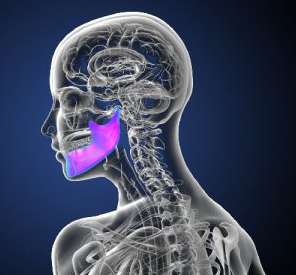 If you come to see us for an extraction, you may hear us talking about “socket preservation” or ”ridge augmentation”, and you might be wondering, what is that?
Socket preservation is a procedure we will sometimes recommend when you are having a tooth extracted. The bones that hold your teeth require frequent use to maintain their size and shape, otherwise they start to recede as they are no longer needed.
When a tooth is extracted, it leaves behind a hole (or “socket”) in the alveolar ridge bone, making it vulnerable to shrinkage. In fact, some studies show that bone loss can be 50% in the first 12 months after extraction.
You may be wondering, “Why does bone loss matter if I don’t have a tooth there anyway?” Unfortunately, without teeth and adequate bone structure, several unwanted oral health problems may occur:
Read the rest of this entry »
Why do we have wisdom teeth anyway?
 Wisdom teeth were once an extremely valuable asset to our ancestors. When a typical diet consisted of chewy plants and uncooked meat, third molars (wisdom teeth), which fit easily into our ancestors’ larger jaws, were absolutely necessary. Wisdom teeth were the evolutionary answer to the need for chewing power to combat excessive wear.
Today, our diets are not as rough as those of our ancestors. With modern marvels like forks, spoons, and knives, as well as softer food, the need for wisdom teeth is virtually nonexistent. And yet, on average, about 65% of the human population is born with wisdom teeth which usually erupt between the ages 17 and 25.
Read the rest of this entry »
3D Printers and Bone Grafting
 There is exciting news in bone grafting technology that will hopefully find its way into the oral surgeon’s office over the next decade! Researchers have been able to create a synthetic bone material using 3D printers that may be better than what is being used now.
3D printers create three-dimensional objects out of a variety of materials using a computer as a precise guide. Although the concept has been in the news a lot recently, the practice actually dates back to before the 21st century. In fact, 3d printing’s roots go back to the early 1980s. Since then, everything from jewelry to synthetic human organs has been printed, much to the amazement of modern society!
And now, surgeons have successfully implanted the 3D-printed synthetic bone grafting material into animals with bone defects. This “hyperelastic bone” was made using just the right combination of bioactive materials and polymers to make a material that could be layered while still wet, allowing for better adherence between layers.
Read the rest of this entry »